
Before meeting Tania Contardo, I had only a vague and partial idea of lichens. I could recognise the yellow patches that dot the rocks near mountain rivers, or the thin green patina that envelops statues in North European gardens like a dress. Sometimes, on a hike, I would stop, fascinated, to observe the branched, ice-coloured structures that form on the bark of alpine pines and firs. Little else.
«The lichen perfectly embodies that maxim that says the whole is more than the sum of its parts,» Tania Contardo tells me instead. She is a researcher specialised in lichenology and coordinator of the Citizen Science working group of the Italian Lichenological Society. «Very, very simply put, it is a symbiosis between a fungus and a unicellular alga, which creates colonies inside the fungus. In reality, it is a true self-sustaining microcosm, in which the fungus plays the role of father and master.» Over an American coffee in a café in the Città Studi area, Contardo explains that lichens have no roots and that all the nutrients they need are absorbed through photosynthesis; at the same time, they are pioneer organisms and extremely resilient. Lichens exist everywhere, even in Antarctica, and they are the first living beings to colonise bare rock. «There are beautiful lichens, of every shape and size. Some cover trees entirely, making them look like Christmas trees. Others live inside the rock and pierce its surface with special acids to release their fruits. You’re there, you see these little coloured cupules, perhaps black or orange, sprouting from the rock, and you think: “What could it be?” Well, it’s a lichen.»
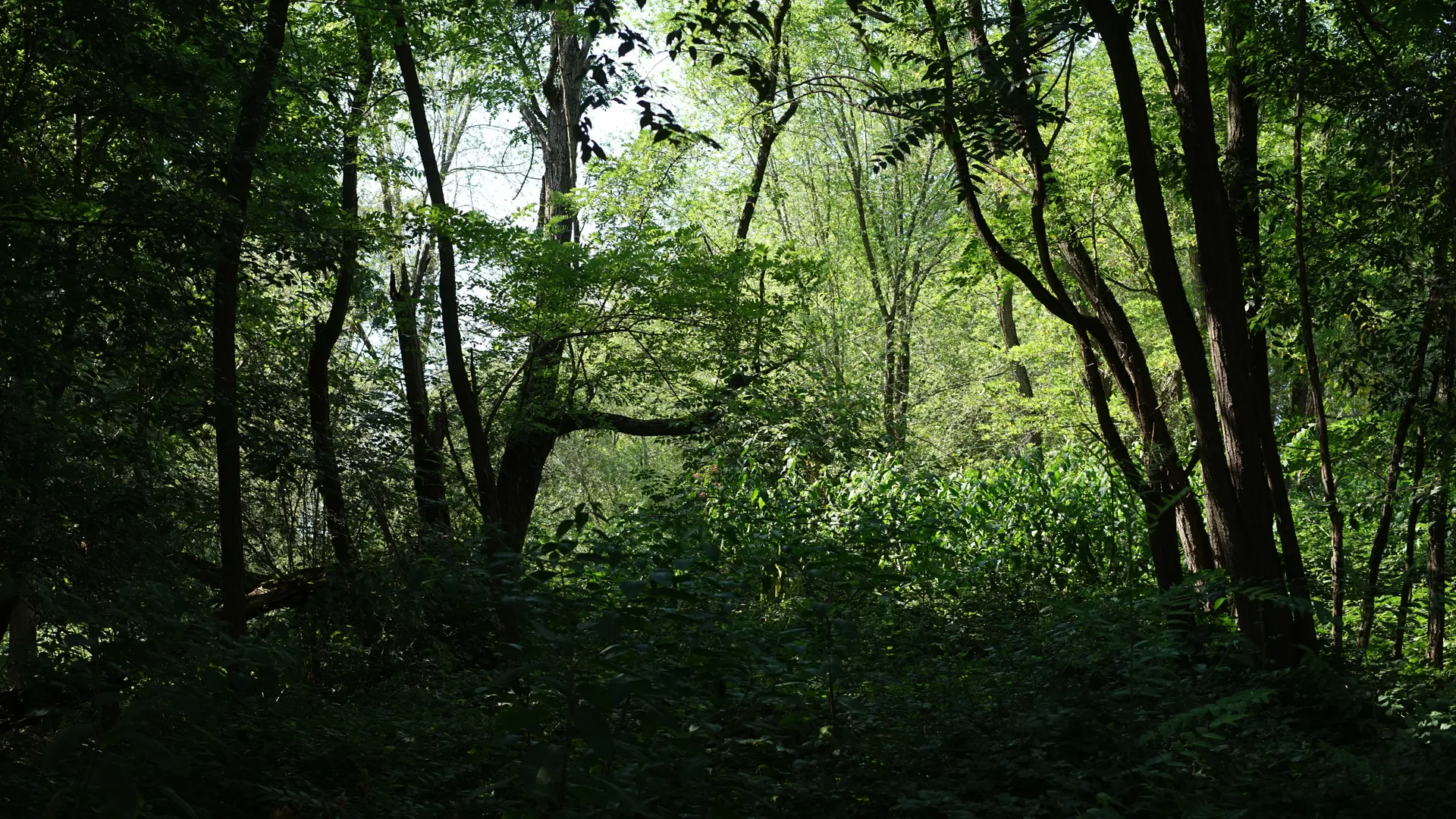
Contardo is one of many professionals dedicating themselves to studying the Drop forest, an 18-hectare urban woodland that has grown over the past thirty years in an area once occupied by various industrial activities. Contardo and her colleague Gabriele Gheza are monitoring air quality through lichen biodiversity and analysing bioaccumulation. I thus discover that, among other things, lichens can be used like Arpa stations (Regional Agency for Environmental Protection) – those that, precisely, track the substances we breathe every day.

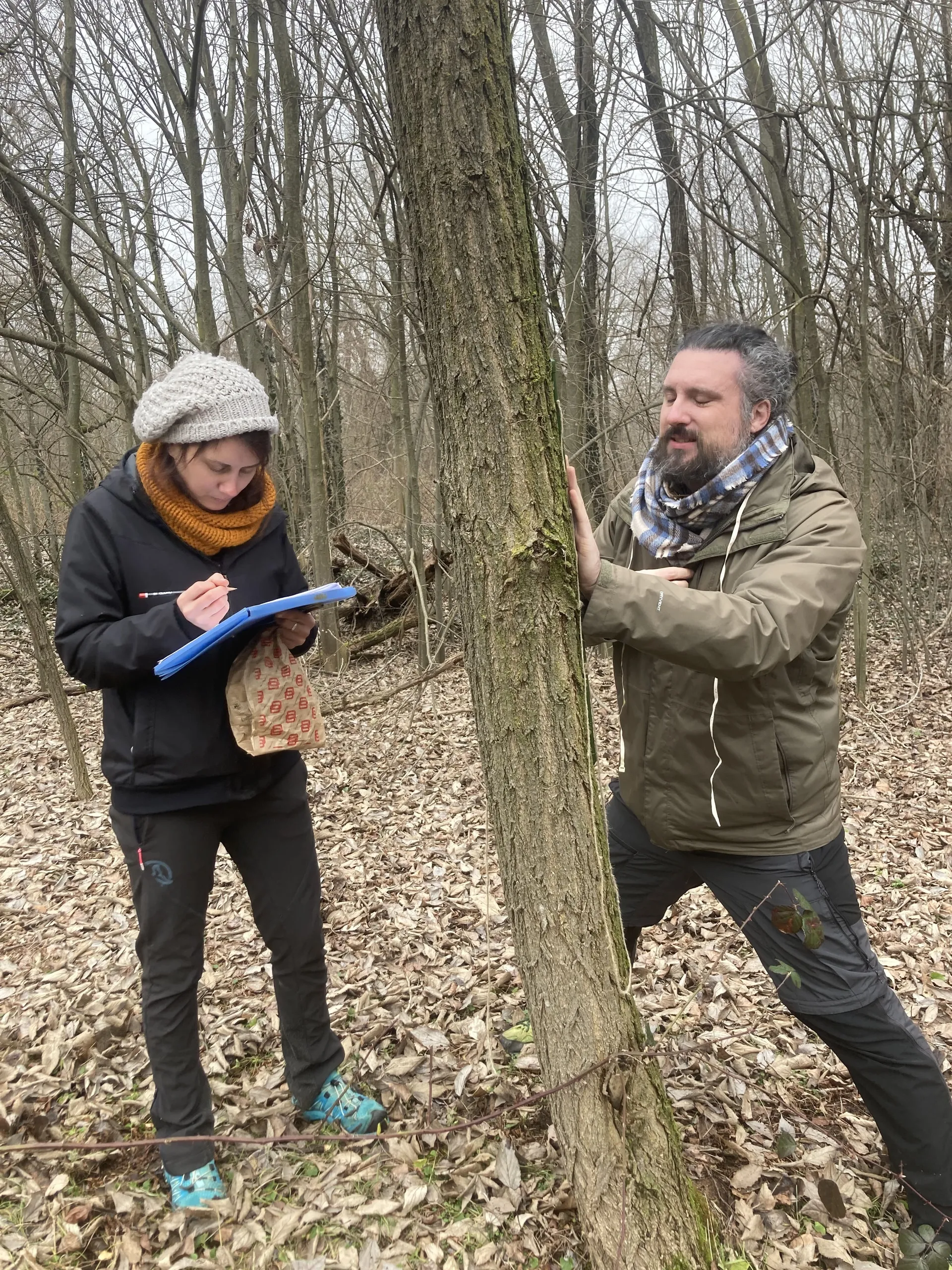
Tania Contardo e Gabriele Gheza in un momento dei lavori di monitoraggio all'interno della Goccia. Foto di @Gianluca Rapaccini
«Unlike plants, lichens have no protective mechanical layers. This is what makes them particularly exposed to pollution. Everything that lands on the lichen’s surface is absorbed, as if a human had raw flesh exposed,» Contardo explains. «As early as the end of the nineteenth century, botanists and scientists noticed that lichens were absent from trees closest to sources of contamination, such as roads or industrial areas. At first, it was an empirical observation; then, over the decades and with accumulating studies, a true science developed. Today, there is a rigorous protocol for monitoring air quality through lichen biodiversity. We study whether lichens are present or not. And if they are, what type they are.»
This part of the monitoring is specifically handled by Gabriele Gheza. Following the detailed guidelines of the Società Lichenologica Italiana, also adopted at European level, Gheza is inventorying and mapping the lichens present inside the Drop. In addition to quantitative analysis, as is normal, there are more resistant species and less resistant ones. Biodiversity thus gives a clear idea of a place’s naturalness.
«In an uncontaminated area, you expect to find lichens of every shape and size,» Contardo tells me. «In a polluted site, there will be few and in poor condition.» Consider that Milan, from the 1950s to the 1980s, was characterised by a virtually uniform scenario of lichen desert: so polluted that lichens simply weren’t there. Subsequently, especially thanks to the ban on leaded petrol and the gradual elimination of coal, the situation has gradually improved, though it remains – as anyone living in the city knows well – very complicated. «Lichens are perfect environmental sentinels because they respond quickly to their surroundings. They suffer early, then disappear. But as soon as the environment improves, they are the first to return, because they are pioneer species. That’s why they are so effective at monitoring air quality.»
Gheza’s research is still in development, and the collected data will need to be systematised, processed, and turned into a report, but for now, the observation of lichens inside the Drop seems to match what one would expect in a Po Valley urban context, one of Europe’s most polluted areas: on trunks, only the most resistant epiphytic lichens appear present. Yet, there are also some “mysteries” that might warrant further investigation: several cladonias have been found on the ground, a species that is very demanding in terms of environmental quality.
Tania Contardo is working on a more recent branch of the discipline, namely bioaccumulation. Indeed, certain lichen species accumulate – or “bioaccumulate” – certain contaminants inside them, particularly metals, in proportion to the amounts present in the atmosphere. Thanks to this ability, it will be possible to measure with good precision the type and quantity of metals in the air, thus gaining a fairly nuanced idea of a place’s pollution level.
In practice, Contardo selected a group of metals significant for the reference area – in the Drop’s context, those linked to industrial presence, since we are talking about an abandoned plant surrounded by other production sites, disused and not, and those related to railway pollution, as the Drop is literally encircled by a railway line: among others, lead, arsenic, cadmium, chromium, copper, lead, iron...
Subsequently, last September, Gheza and Contardo went to Mortirolo in the Rhaetian Alps and collected samples of a specific lichen species, pseudevernia furfuracea (while Contardo tells me this, I Google a photo, and on the screen appear fascinating ivory-coloured structures resembling dozens of intertwined deer antlers). Part of the sample was frozen to avoid contamination: it will serve as the control group. The remaining part, after rough cleaning, was exposed at the Drop. The fact that lichens can be transported without damage is one of the advantages of having no roots.

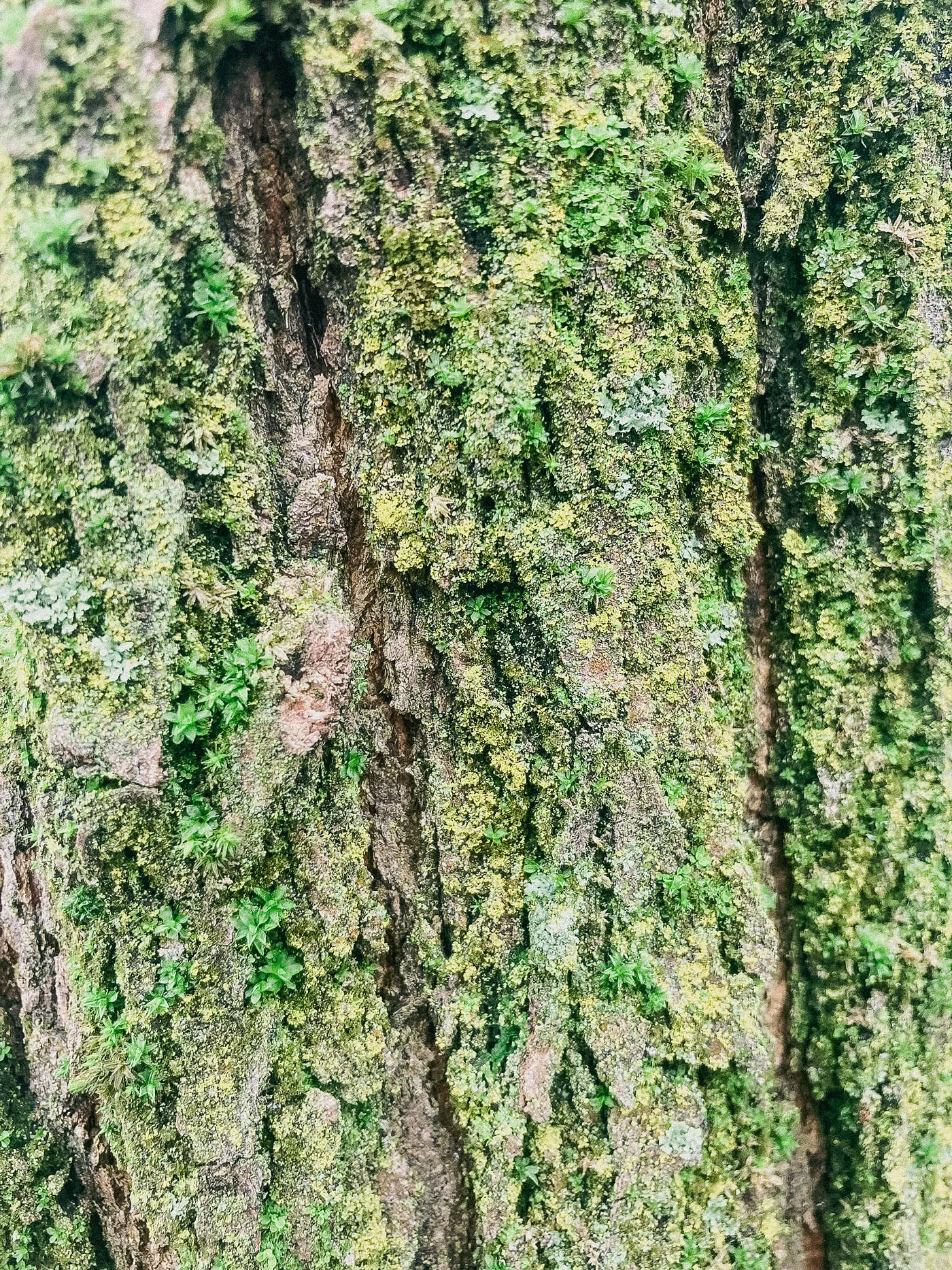
Il fusto di un albero alla Goccia, ricoperto da un manto brillante di muschio e licheni. Foto di @Gianluca Rapaccini
On 31 October 2025, the two lichenologists thus entered the Drop forest, selected five trees, and on each attached a lichen to the bark using a gardener’s ribbon. Even for choosing the “monitoring stations” – as they are called – the protocol is detailed: the tree species is irrelevant here – even a lamppost would do, as long as it’s not rusty – but the selected tree must not be too close to others, to ensure free air circulation. For the same reason, lichens are attached to outer branches, as high as possible, in any case above 1.5 or 2 metres, because the soil is rich in minerals and, if placed too close to the ground, there is a risk of contaminating the results. Naturally, monitoring stations are also well spaced from each other, to obtain a mapping of the entire area and thus account for biological variability.
Three months later, on 31 January 2026, Gheza and Contardo returned to the Drop forest to retrieve the samples (in the meantime, the five lichens had become four, as one tree was felled). Currently, the samples are in a laboratory at the University of Siena, where they will be pulverised, digested, and then analysed using specific machines. Based on the differences in metal concentrations found between the Drop-exposed samples and those from the control group, exhumed from the freezer, it will be possible to assess how much metal has accumulated. «Three months of exposure is the ideal timeframe,» Contardo explains. «You can go a bit longer, but not too much, because lichens, being living matter, can reach equilibrium with the environment after a certain accumulation period, and information is lost.»
Meanwhile, our American coffees are finished, the cups have been cleared, and we’ve ordered two more. The café has filled with laptops, students, and freelancers: we are near the other Politecnico campus from the Bovisa one around which the Drop developed. I’ve realised by now that scientists reveal results only at the end of their research, never while it’s ongoing, so to get into specifics we’ll need to reconvene in a few months. What is certain is that combining Contardo’s results with Gheza’s will yield a detailed mapping of air quality and heavy metal distribution inside the Drop forest.
Not only that: the results can be compared with any past measurements and used as a starting point for future observations. Thus understanding how Bovisa in particular and the city of Milan in general are evolving in terms of air quality. Broadening the view, it might also reveal the Drop forest’s “protective” role towards the surrounding area. Contardo herself, in a previous study, installed a lichen near the Spirit de Milan venue, very close to the Drop, and found very high lead levels inside it – most likely an unwanted legacy of the disused Livellara Glassworks’ industrial activity. «Since we know that just outside the Drop, lead concentration is high, and other metals are present in fairly elevated amounts, if I don’t find this correspondence in my lichens inside the Drop, it could mean the forest has a strong protective effect.»
But in any case, we conclude together before parting, developing the most accurate possible picture of a territory is the first step towards imagining its future.
Michele Turazzi. Michele Turazzi lives in Milan and works in publishing. He has published the novel Prima della rivolta (Nottetempo 2023, winner of the Demetra Prize for Environmental Literature 2024) and the narrative reportage Milano di carta (Il Palindromo 2018).